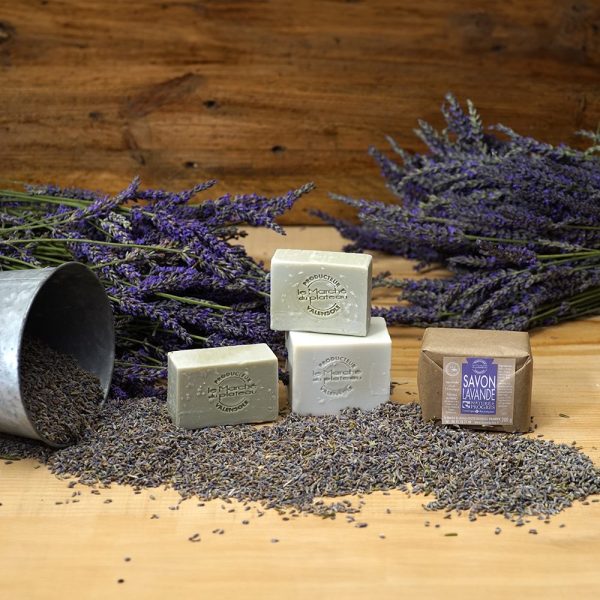
Cold saponification

A process that respects the environment and your skin

At Marché du Plateau, we’re proud to make our soaps using the traditional cold-saponification method. Ce procédé artisanal, qui préserve les bienfaits des ingrédients naturels utilisés, nécessite seulement deux composants principaux : des huiles ou des beurres qui forment la base grasse du savon, et de la soude, ou hydroxyde de sodium, qui agit comme un agent alcalin.

When these two elements are mixed in the right proportions, a chemical reaction occurs, transforming the oils and soda into a new product: soap. This fascinating transformation process highlights the harmony between science and nature, and is at the heart of our organic and natural soap production philosophy.

The main advantage of cold saponification is that it preserves the beneficial properties of the oils used, unlike the hot saponification method which can degrade certain nutrients. As a result, our soaps retain all the vitamin and antioxidant richness of the organic lavender oils we use, providing your skin with gentle, natural care.

Discover the craftsmanship and authenticity of our products by choosing our cold-saponified soapsa real guarantee of quality and respect for the environment.

Manufacturing

At Marché du Plateau, we celebrate the art of cold saponification, a process that transforms fats – vegetable oils and butters – into soap through a delicate chemical reaction. This alchemical journey takes place at low temperatures, generally below 30°C, to preserve the beneficial properties of the ingredients used.

At the heart of this transformation lies the« trace » stage, a crucial moment when the mixture acquires the texture of a soap paste of varying thickness. For the artisan soap-maker, this stage is fundamental, as it enables him to monitor the consistency of the soap and ensure its optimum quality.

This is also when we add the other natural ingredients that make our cold-saponified soaps so rich. Essential oils for their aromatic and therapeutic properties, mineral or plant colorants for a touch of natural color, plant powders for their benefits to the skin, and even honey for its moisturizing and soothing virtues.

Once the soap paste has reached the desired consistency, it is carefully poured into a mold, then placed in a cool place to harden, usually for 24 to 48 hours. This is followed by the« cure« , a period of rest in a dry, airy place for at least 4 weeks. Curing is an essential phase that finalizes saponification, resulting in a soap that is gentler, longer-lasting and more respectful of your skin.

Explore the authenticity and expertise of our cold-saponification process and be seduced by the exceptional quality of our of our natural and organic soaps.

Suivez-nous

Découvrez nos dernières publications sur Instagram et suivez-nous pour être informé des dernières nouveautés et conseils d’utilisation de nos produits.

Avis
clients

Cold saponification requires the use of 2 main ingredients: oils (or butters), which make up the fats, and soda (sodium hydroxide) used as a strong base. Once these compounds have been blended, soap-making can begin…

The transformation of fats into soap is the result of a chemical reaction. For several minutes at low temperature, soda gradually transforms vegetable oils and/or butters into soap. The advantage of working with temperatures below 30°C is that the properties of the ingredients used are preserved. During cold saponification, the mixture takes on the texture of a soap paste of varying thickness: this is the « trace » stage.

The latter is particularly important for the artisan soap-maker, who must ensure the consistency of his soap. When the trace appears, it’s also time to add the other natural ingredients that will make up cold-saponified soap: essential oils, mineral or vegetable colorants, plant powders, essential oils, honeys…

Once the soap dough has reached the desired consistency, it is poured into a mold and placed in the refrigerator to harden (generally for 24 to 48 hours). After demolding, comes the « curing » stage. The soap then sits in a dry, well-ventilated place for at least 4 weeks. The cure is important because it finalizes the saponification process, resulting in a softer soap that melts more slowly.